Answers from your documents
Catalogues, instructions, policies, procedures and FAQs become usable conversation context.
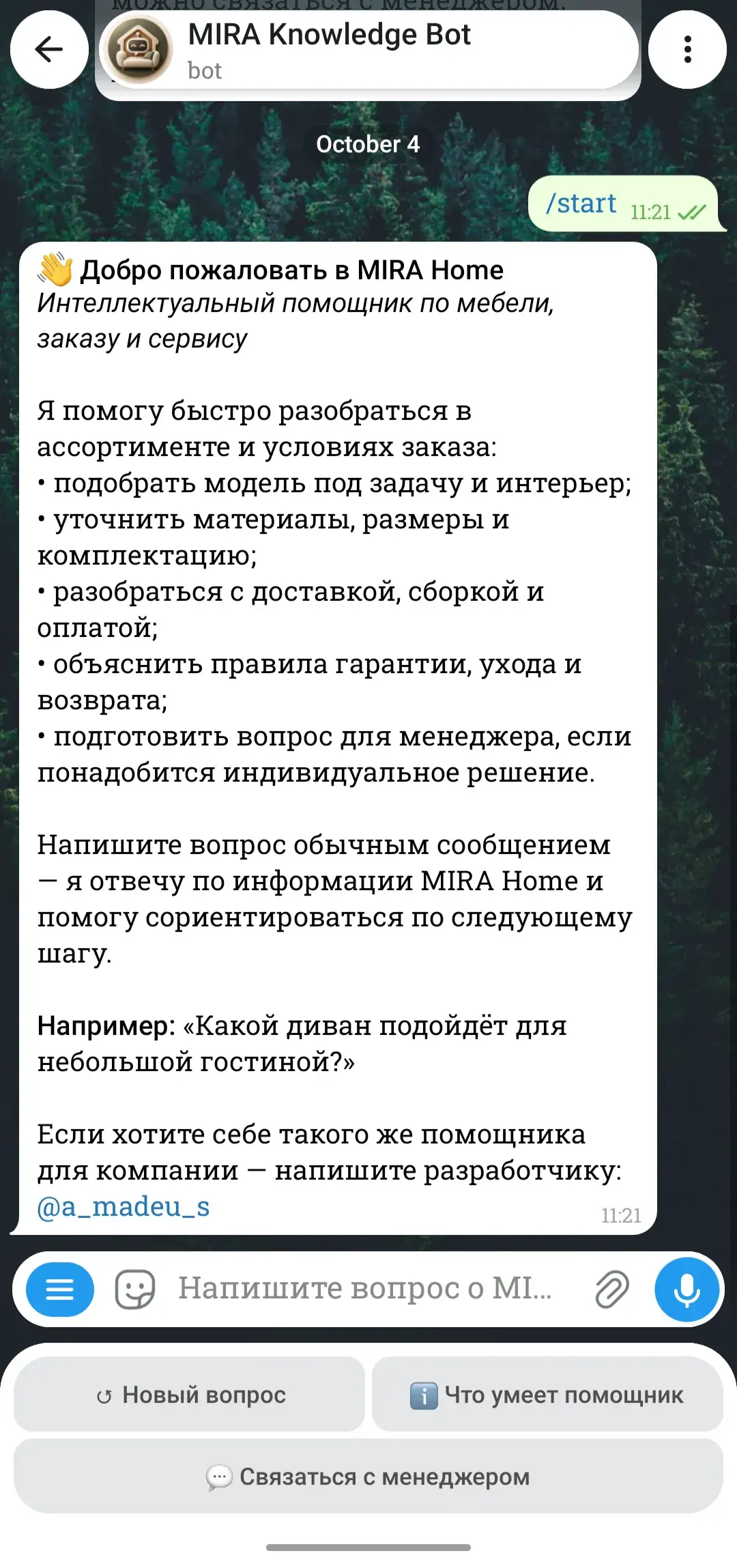
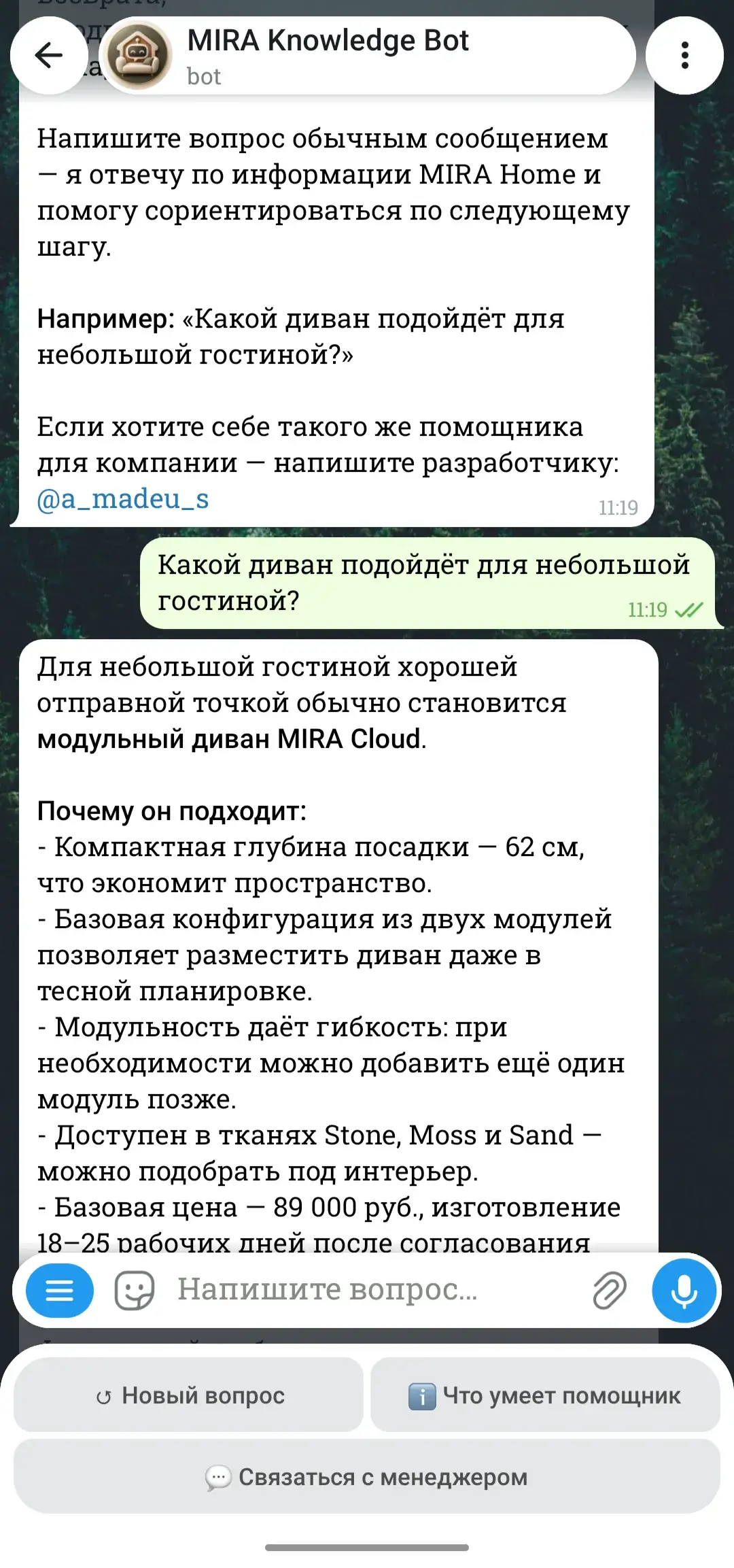
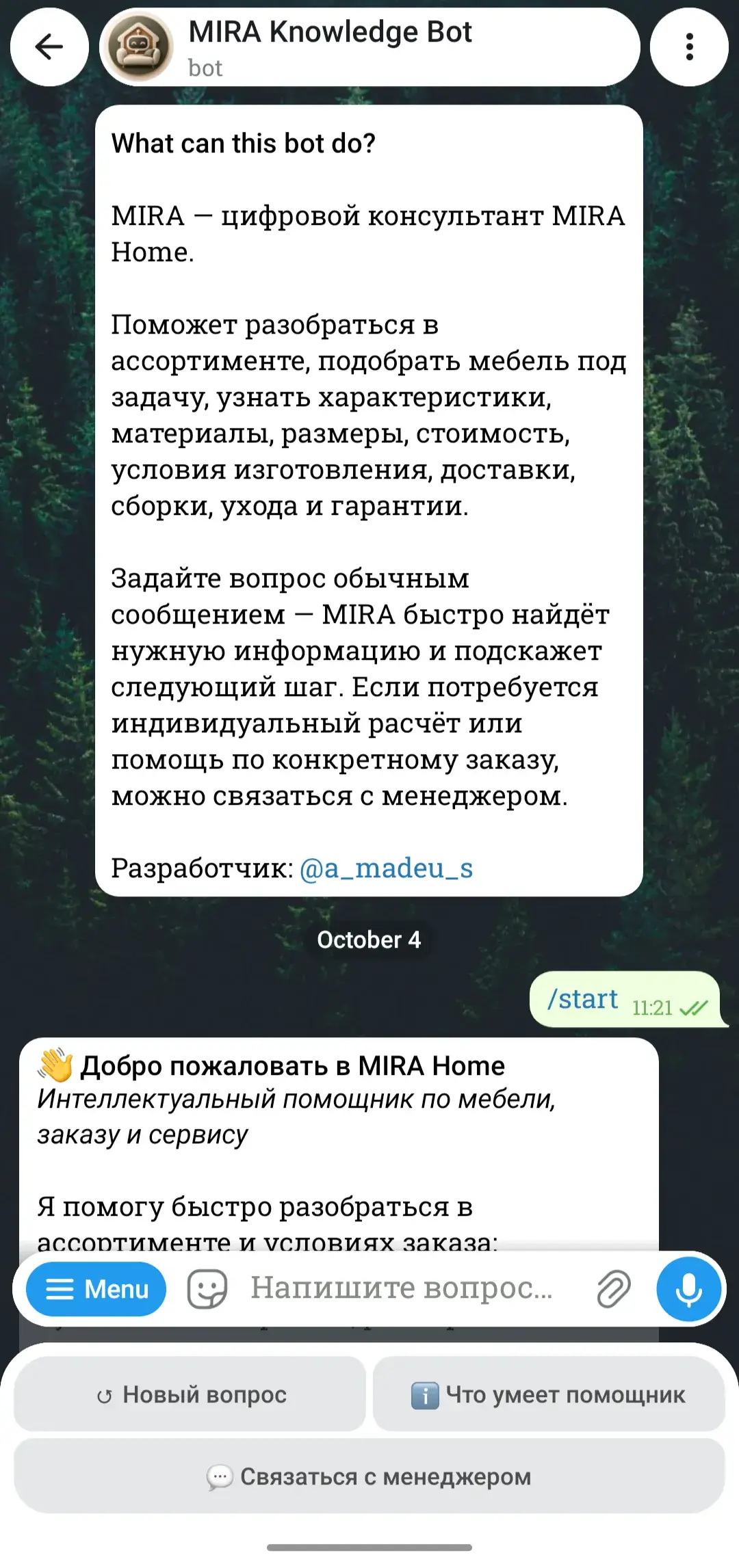
The company uploads its documents and the client asks questions in ordinary Telegram messages. The bot finds relevant information, uses previous messages and replies in the company style — without manual file searches or repetitive manager answers.
The bot removes repetitive questions from the team without becoming a rigid autoresponder: it uses internal information, remembers the conversation and knows when a human is needed.
Catalogues, instructions, policies, procedures and FAQs become usable conversation context.
There is no need to guess a menu button: the bot understands questions, follow-ups and topic changes.
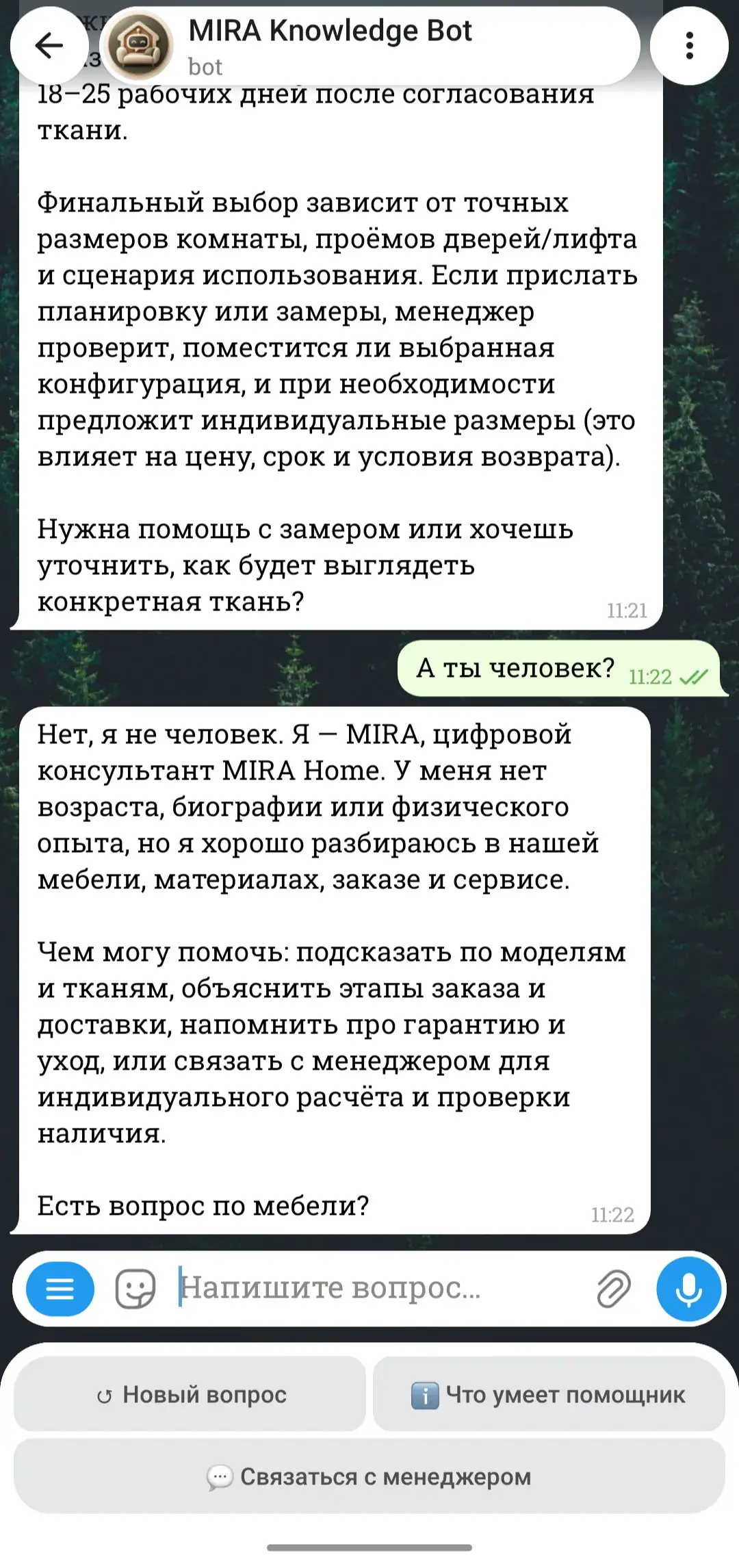
Questions like “what about this option?” or “how long will it take?” do not require repeating the whole context.
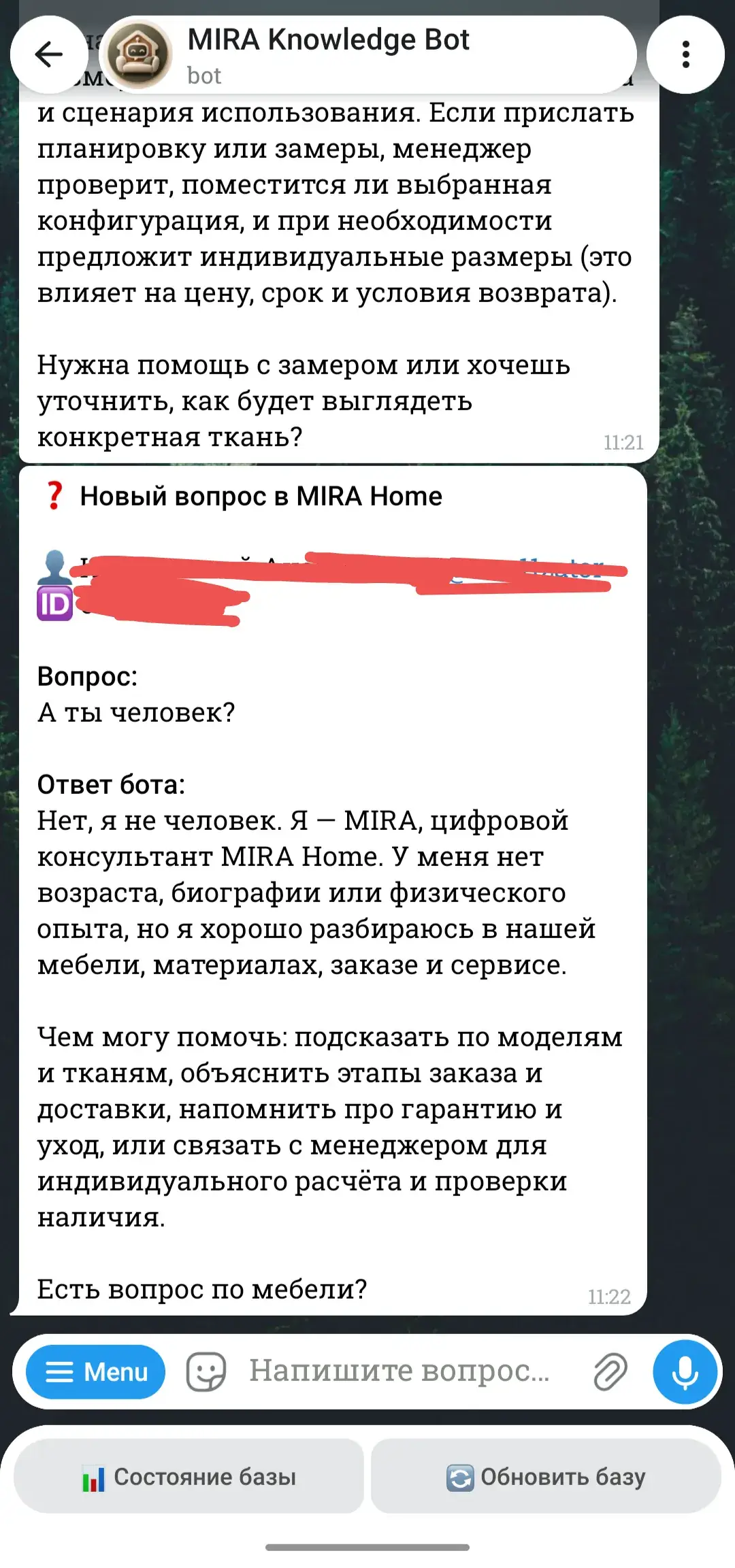
The administrator sees who asked, what they asked and what answer the bot sent.
After documents are added or changed, the administrator reindexes the base without changing the interface.
If the model, knowledge base or a component fails, the client gets a clear fallback and a way to reach a manager.
The model is not simply told to answer. The system finds relevant company fragments and passes them with the conversation rules before generating a reply.
MD, TXT, PDF and DOCX: catalogues, instructions, policies and frequently asked questions.
A local index finds the fragments related to the current client question.
The model receives rules, context and recent messages to reply naturally and stay on point.
The client gets an answer while the team sees complex questions and can join manually.
From the first message to a complex follow-up, the interface stays familiar and the replies feel like a real consultation.
Materials go into one folder: instructions, catalogues, rules, FAQs and internal procedures.
Documents are split into chunks and become available for semantic search.
The client can ask about products, timing, rules or continue the previous topic.
If the data is insufficient or an individual calculation is needed, the bot suggests a manager and notifies the team.
This setup fits companies that already have documents but still answer the same questions manually for clients and employees.
Explains products, specifications, materials, options and ordering conditions.
Answers about delivery, warranty, returns, payment and routine requests.
Helps employees quickly find rules, instructions and work procedures.
Captures the essence of the request and gives the manager useful context instead of a vague “call the client back”.
Documents, FAQs, instructions and changing materials can be combined in one access point.
The client does not need a new website account; they ask where they already communicate.
The administrator does not need a complex dashboard. Telegram keeps only useful service actions: knowledge status, document updates and assistant notifications.
Update the knowledge base after changing files without restarting the bot.
Receive a client question together with the answer they received.
Preserve the history and keep the request even during a temporary model error.
The complex part stays inside. For the client it is a normal Telegram dialogue, while the system manages knowledge, context, limits and resilience separately.
I will build a Telegram bot that answers from your materials, reduces routine work and passes only important requests to a manager.